
Category: Trends & The Future

AI industry outlook: Signals to Track for 2026 — Verified trends, drivers, and what to monitor
A careful, evidence-led review of the AI industry outlook: verified trends (open models, multimodal progress, enterprise scaling challenges), the forces behind them (compute, data, standards), areas of expert disagreement, practical implications for teams, and a prioritized watchlist of measurable signals and metrics.

AI compute costs: current trends in compute, costs, and efficiency
This evidence-led analysis examines how AI compute costs are shifting today — driven by new accelerator generations, software efficiency (quantization, distillation, sparse models), benchmarking results, and rising energy demands — and separates well-documented signals from open uncertainties relevant to engineering and procurement decisions.

Retrieval-Centric AI: Why Search Is Back and What That Means for AI Teams
Retrieval-Centric AI—the renewed focus on retrieval-augmented systems and vector search—has reshaped how organizations keep generative models accurate, up to date, and auditable. This evidence-led article separates verified signals from open questions, explains the technical and market drivers, and offers practical steps teams can take now.

Multimodal AI: The New Default Interface — Evidence, Drivers, and Practical Implications
A grounded, evidence-led examination of how multimodal AI is shifting from research curiosity to a practical interface layer. This article separates documented signals (product launches, benchmarks, standards activity) from areas of uncertainty, and translates implications for teams, creators, and users.

AI governance trends: 2026 and beyond — an evidence-led outlook on regulation, standards, and operational risk
This analytical review examines AI governance trends for 2026 and beyond, separating verified developments (regulatory timelines, standards work, government guidance) from areas of uncertainty (enforcement detail, geopolitical fragmentation). It synthesizes official sources and high-trust reporting to help teams, creators, and policymakers prepare for near-term governance shifts.

Open vs Closed AI: Mapping the Competitive Landscape and Practical Trade‑offs
This evidence‑led analysis examines the competitive dynamics between open and closed AI approaches. It separates verified signals—model releases, enterprise adoption, API gating, and cost trends—from areas that remain uncertain, and offers practical implications and watch‑list metrics for teams and decision makers.

Consumer AI: New Behaviors and Expectations — Verified Signals, Drivers, and Practical Implications
This analytical article examines how consumer AI is changing everyday behaviors, the verified signals driving adoption, where experts disagree, and practical takeaways for product teams, creators, and users. It separates documented facts from open uncertainties and cites industry reports, surveys, and vendor announcements.
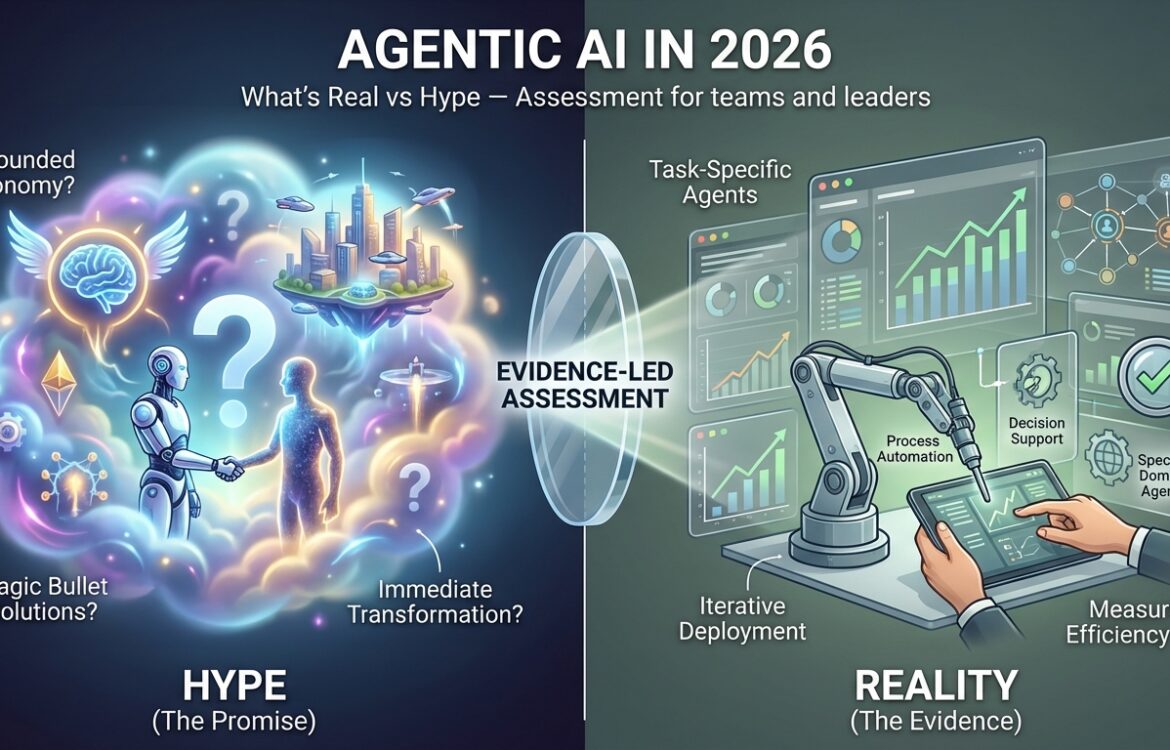
Agentic AI in 2026: What’s Real vs Hype — Evidence-led assessment for teams and leaders
A balanced, source‑based look at agentic AI in 2026: what current products and research actually deliver, where risks and uncertainties remain, and practical guidance for teams, creators, and users deciding whether and how to adopt agentic systems.

Enterprise AI Adoption: What’s Working — Evidence from Recent Deployments
A grounded, evidence-led look at enterprise AI adoption: where organizations are realizing value, which practices reduce risk, where experts disagree, and what measurable signals teams should track as they move from pilots to scaled production.