
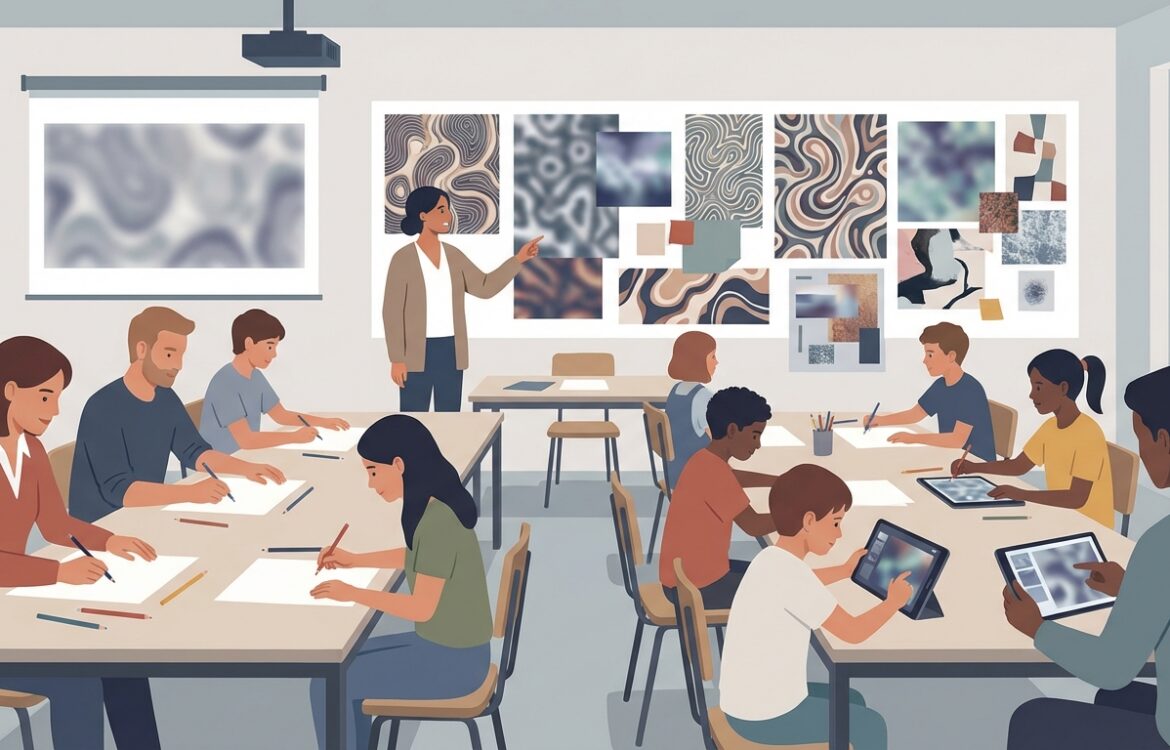
AI and Creativity: Tools, Taste, and Craft — What the Evidence Says and Practical Steps for Creators
AI and creativity are now deeply entwined: generative models, assistants, and automated tools are reshaping how ideas are produced, refined, and distributed. This article asks—what is actually changing today (not just imagined), what do creators report as benefits and limits, what evidence exists for risks, who is most affected, and what practical steps can people take now?
What is changing (observable signals)
Generative AI tools—large language models (LLMs) for text and code and diffusion/transformer models for images, audio, and video—have moved from research labs into mainstream creative workflows, from professional studios to classrooms and hobbyist forums. Industry analyses estimate generative AI could add trillions of dollars in economic value across many functions including marketing, R&D and creative content production, driving rapid adoption in business settings. (mckinsey.com)
Public awareness and daily use of AI have risen sharply: national surveys show a growing share of U.S. adults reporting AI use for work or study and a widening gap between expert optimism and public caution about AI’s effects, including on creative work. (pewresearch.org)
At the same time, several high-profile legal and policy developments have signaled that the way models are trained and how outputs reuse existing creative works is contested. Multiple lawsuits and rights-holder actions over training data and output attribution remain active in courts and policy fora. European regulatory processes and statements by cultural groups likewise show tensions between promoting innovation and protecting creators’ rights. (copyrightalliance.org)
On the production side, both commercial platforms and open-source projects have rapidly iterated features—style controls, inpainting, multimodal prompts, and collaboration interfaces—so the technical affordances artists and designers use today are both more powerful and more widely accessible than two years ago. Industry reporting and platform releases illustrate that major creative-software vendors are embedding generative capabilities into mainstream tools. (theverge.com)
Benefits people report (with limits)
Many creators and organizations report three broad practical benefits from AI tools: idea generation (rapid ideation and mood-boarding), time savings on routine or technical tasks (retouching, transcription, variations), and new expressive affordances (novel combinations, cross-modal experiments). Surveys and user studies find that people frequently use AI tools to brainstorm concepts or explore variations they would not have produced alone. (pewresearch.org)
Those productivity benefits have measurable business appeal: consulting analyses show use cases where generative AI improves throughput for creative teams and marketing content production, which organizations equate to cost savings or faster time-to-market. However, economic forecasts are models of potential value and depend on adoption, integration, and policy choices. (mckinsey.com)
Human-centered research also finds that thoughtfully designed human-AI workflows—where the AI supports exploration and the human steers taste and craft—can improve perceived creativity and controllability, while mitigating problems like premature convergence on the first “good” result. These studies emphasize process design: how prompts, editing tools, and iterative scaffolds change outcomes. Evidence here is primarily experimental and qualitative but consistent across HCI literature. (arxiv.org)
Limits reported by users include uneven quality (outputs that require heavy editing), difficulty translating AI suggestions into finished craft, and concerns about originality and authorship when models draw on existing works. In short: AI often accelerates early-stage creative work but does not automatically replace the skill, curation, and craft needed to make robust, culturally resonant work. (pewresearch.org)
Concerns and risks (with evidence level)
Legal and economic risks: Rights holders and creators have pursued litigation alleging that scraping copyrighted works to train models and producing outputs in recognizable styles may violate copyright and related rights. These cases are active and unsettled; courts have allowed some claims to proceed, making the legal risk for platform operators and downstream users non-trivial. Evidence level: high (ongoing litigation and public filings). (copyrightalliance.org)
Income displacement and market shifts: Sector-level studies and rightsholder reports warn that, without policy safeguards or new business models, some creative workers could see reduced income, particularly where generative AI can cheaply produce standardized creative outputs (e.g., stock imagery, simple jingles, rapid illustration). Projections vary substantially by methodology and assumptions; this is an area of active debate among economists, creators’ organizations, and platforms. Evidence level: medium (model-based forecasts, rights-holder reports). (theguardian.com)
Cultural and aesthetic risks: Scholars and designers document phenomena such as design fixation (users converging too quickly on AI outputs), homogenization (over-reliance on common training patterns), and loss of context-sensitive craft—that is, subtleties that come from lived cultural knowledge and time-intensive practice. Evidence level: emerging (HCI experiments and qualitative studies). (arxiv.org)
Misinformation, impersonation, and provenance: Generative audio and image systems can be used to impersonate voices or fabricate realistic media; public surveys show strong concern about misinformation and a demand for disclosure. Evidence level: high for misuse potential and public worry; medium for measured societal impact so far. (pewresearch.org)
Equity and representation: Models can reproduce or amplify biases present in their training data, affecting which voices and styles are visible, credited, or rewarded. This raises both ethical and practical questions about whose taste becomes dominant in AI-assisted culture. Evidence level: high for bias in models generally; medium for long-term cultural effects. (pewresearch.org)
How different groups are affected
Visual artists and illustrators: Many visual creators report mixed feelings—some adopt text-to-image tools for ideation and paid briefs, while others fear loss of commissions and unauthorized reuse of their work. Ongoing litigation shows concrete legal dispute lines that specifically affect visual creators. (copyrightalliance.org)
Musicians and audio professionals: Rights-holder reports and industry analysis indicate that AI capable of generating music or imitating vocal styles could reduce certain types of routine work in music production and licensing unless new licensing and attribution mechanisms are put in place. Organizations representing composers and songwriters have raised warnings about income impacts. Evidence includes industry studies and public statements from rights organizations. (theguardian.com)
Designers and advertising: Agencies and in-house marketing teams report time savings and faster iteration cycles from generative assistance; smaller agencies without resources to integrate new workflows may face competitive pressure. Evidence here is a mix of industry reporting and business surveys. (mckinsey.com)
Educators and students: In classrooms, AI is both a tool for experimentation and a challenge to assessment and craft teaching. Some educators use AI to democratize access to prototyping, while others worry about students skipping foundational skill development. Evidence: institutional reports and academic studies note rapid curricular changes and mixed outcomes. (pewresearch.org)
Audiences and cultural institutions: Museums, festivals, and curators are experimenting with AI-driven exhibitions and conservation tools, but institutions must weigh provenance, interpretation, and consent for works derived from living artists’ styles. Evidence: reportage and institutional pilots show active experimentation with care and caution. (theguardian.com)
Practical guidance for readers
1) Learn the tools, but treat them as collaborators, not shortcuts. Spend time learning how models behave, when they hallucinate, and how prompt design affects output. Structured human-AI workflows (brainstorming — then refinement) tend to yield better creative control than ad-hoc prompting. (arxiv.org)
2) Document sources, licenses, and terms. If you use a model commercially or to produce work for clients, check the model and platform terms of service and keep records of prompts and model versions. Rightsholder litigation shows that provenance and usage documentation can become legally relevant. (copyrightalliance.org)
3) Negotiate clear contracts and pricing. If AI speeds parts of a workflow, revisit how value is allocated: are you charging for craft, curation, rights to reuse, or simply output? Consider adding explicit clauses about AI use, derivative rights, and attribution in client agreements. Evidence level: practice-based guidance informed by industry trends. (mckinsey.com)
4) Protect and diversify income. Explore models that emphasize scarcity, personalization, and direct relationships with audiences (commissions, memberships, workshops) that are harder to commodify with off‑the‑shelf AI outputs. Rights groups and industry reports argue compensation or licensing mechanisms will matter for sustainability. (theguardian.com)
5) Advocate for policy and standards. Engage with industry consortia, professional associations, and regional policy processes (for example, discussions around the EU AI Act and data-disclosure templates) to push for fair training practices, transparency, and remedies for harmed creators. Evidence: public statements and regulatory developments show creators’ groups are active in these debates. (adagp.fr)
6) Build interpretability and ethics into practice. When possible, use tools that allow controllable attributes, provenance metadata, or explainable outputs; participate in or demand auditability from suppliers when working on sensitive cultural projects. Human-centered design research shows these practices improve trust and creative alignment. (arxiv.org)
“This article is for informational purposes and does not constitute professional advice.”
FAQ
What is meant by “AI and creativity” in everyday creative work?
“AI and creativity” refers to the use of computational models (like LLMs or image synthesis models) as tools for ideation, drafting, editing, or generating finished assets. In practice this ranges from using AI to generate rough visual concepts or music sketches to tools that assist with editing, layout, or code—augmenting parts of the creative process rather than fully replacing human judgment. Evidence from user surveys and HCI studies shows creators most often use AI for brainstorming and iteration, while retaining human control over final aesthetic decisions. (pewresearch.org)
Will AI and creativity replace professional artists and designers?
Short answer: unlikely to wholesale replace them in the near term. Some routine or commodified tasks may be automated, changing demand for certain services; but craft, curation, cultural literacy, and professional networks still matter. Economic modeling and rights-holder reports warn of income pressure in specific sectors unless new licensing or business models emerge. That said, creative roles are already shifting—some practitioners report higher productivity and new opportunities when they adopt AI tools. (mckinsey.com)
How should creators think about copyright and attribution when using generative tools?
Creators should check platform terms, keep records of prompts and outputs, and, when in doubt, avoid presenting an AI‑generated derivative as purely their original, unassisted work. Several court cases and rights-holder actions show the legal landscape is unsettled; best practice is to obtain clarity in contracts and to seek legal counsel for commercial uses that might implicate third‑party rights. (copyrightalliance.org)
How can educators use AI to teach creative craft responsibly?
Use AI to scaffold learning—e.g., rapid prototyping for experimentation—while designing assessments that evaluate process, technique, and critical reasoning (not just final outputs). Reinforce foundational skills and ethical discussions around authorship and provenance. Evidence from educational pilots and surveys shows mixed outcomes, so balanced, supervised integration is advised. (pewresearch.org)
How can small creative businesses benefit from AI without risking cultural harm?
Adopt AI to automate repetitive production tasks (file prep, captions, variant generation) while investing saved time into higher-value services (personalization, storytelling, client relationships). Negotiate transparent terms with clients about AI use, and consider membership or direct-sale models that emphasize unique human relationships and experiences. Industry analyses note clear gains when AI is used to augment rather than substitute core craft. (mckinsey.com)
Final note: the current picture is mixed and evolving. There is robust evidence for rapid technical adoption and tangible productivity benefits in many settings, clear legal disputes over data and rights, and documented social concerns from public surveys. The balance of outcomes for creativity will depend on design choices, business models, regulation, and how creators, platforms, and audiences negotiate taste, attribution, and value.

I explore how AI is reshaping work, creativity, education, and decision-making, grounding every topic in evidence rather than hype. I write about real trade-offs—open vs closed models, compute costs, information quality, and organizational impact—so readers can understand what actually matters and what to watch next.