
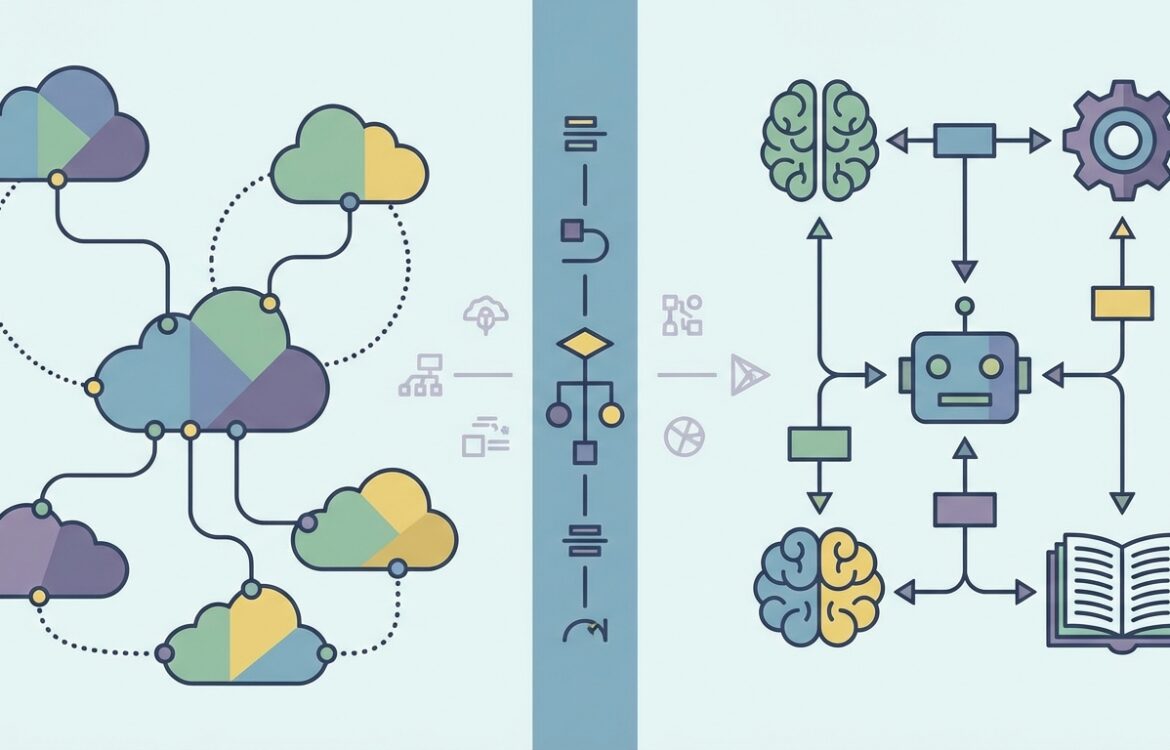
How to Choose LLM Platforms in 2026: Practical Criteria, Trade-offs, and Alternatives
Choosing between LLM platforms in 2026 is about matching technical needs, data governance, and total cost of ownership—not headlines. This guide helps engineering leads, product managers, and technical buyers evaluate LLM platforms 2026 by comparing what platforms actually offer (APIs, managed hosting, private deployment, model families), how providers price and publish changes, and which trade-offs matter in production. Where possible, claims are supported with vendor documentation, release notes, privacy/security pages, and independent benchmark outcomes.
What it does (and what it doesn’t)
LLM platforms provide hosted access to large language models (LLMs) and related services: model endpoints for text, multimodal inputs/outputs, fine-tuning or supervised tuning, tools for agentic workflows, and infrastructure features like provisioned throughput, private VPC deployment, and customer-managed keys. For example, major cloud-based platforms expose model families and managed endpoints with document and image processing features, and publish features and deprecations in release notes. Google’s Vertex AI documents regular Model Garden additions and agent features that support private VPCs and CMEK for enterprise privacy needs. (cloud.google.com)
What LLM platforms do not guarantee: perfect factual accuracy, long-term free usage, or universal privacy defaults that match every compliance regime. Models still hallucinate and require guardrails; vendors continue to change default behaviors through release notes and policy updates, so assumptions about training data use or retention should be verified against the provider’s privacy or trust center. OpenAI and Anthropic both maintain public privacy and release-note pages that explain evolving defaults and opt-in/opt-out controls for model training or data retention. (help.openai.com)
Key features and limitations
- Model families and capability tiers. Providers expose multiple model sizes and specialized variants (reasoning-optimized, low-latency mini models, multimodal models). OpenAI lists several model tiers and specialized APIs including realtime and image/video endpoints; each tier has different token pricing and performance characteristics. (openai.com)
- Throughput and latency options. Managed provisioned throughput and batch APIs are common for predictable latency and cost control; Vertex AI and other cloud services publish provisioned throughput options and migration windows when endpoints become GA or deprecated. Plan for workload spikes and 429 handling. (cloud.google.com)
- Fine-tuning and customization. Most platforms now offer supervised fine-tuning or parameter-efficient tuning options with distinct pricing and token costs; however, the availability and supported model families differ by vendor and region. OpenAI documents fine-tuning prices by model family; Google and other providers enable tuning or evaluation services in their Model Garden. (openai.com)
- Data protection controls. Enterprise controls such as customer-managed encryption keys (CMEK), private VPC endpoints, and region-restricted data hosting are available on leading cloud-hosted platforms, but exact coverage varies by product and by paid tier. Verify CMEK and VPC options for HIPAA or regulated workloads. (cloud.google.com)
- Safety & content controls. Providers publish usage policies and trust/safety processes; these affect how inputs are retained, when data may be reviewed for policy enforcement, and what enterprise contracts allow. Anthropic’s privacy center and support pages outline retention and access controls for consumer and commercial products. (privacy.anthropic.com)
- Operational tooling. Consider monitoring, dashboards, cost metering, rate limiting, model versioning, and migration support. Release notes and changelogs are essential to track deprecations or model swaps that can affect production behavior. Google Cloud and OpenAI maintain release-note pages that log GA, preview, and deprecation dates. (cloud.google.com)
Limitations to be explicit about:
- Performance vs. cost: higher-capability models typically cost more per input/output token and may add latency. OpenAI’s public pricing page shows per-token differences across model classes and the Realtime/Responses/Chat APIs. (openai.com)
- Data residency and training: vendors’ policies on whether and how customer data are used to improve base models differ—and may change. Check each provider’s privacy documentation and any enterprise contract clauses. Anthropic, for example, documents distinct behavior for consumer vs. commercial/API use and has published updates to its privacy/consumer terms. (anthropic.com)
- Vendor lock-in risk: migration complexity increases with proprietary features (agents, specialized token formats, built-in tools). Prefer abstraction layers or containerized/self-hosted fallbacks if long-term portability matters. Release notes often announce deprecations you must plan for. (platform.openai.com)
Pricing and access considerations
Pricing models in 2026 generally combine per-token input/output charges, provisioned throughput or compute reservations, and add-ons (tool calls, file storage, agent sessions). OpenAI’s published API pricing shows distinct input and output token rates across flagship and mini models, plus separate charges for realtime and multimedia APIs; they also publish costs for fine-tuning and built-in tools. Use published vendor pricing as a baseline, then run representative workloads to estimate actual monthly bills. (openai.com)
Anthropic’s consumer subscription pricing for Claude Pro/Max (consumer vs. commercial tiers) is available from their support pages; commercial and API terms may be negotiated separately. For consumer-facing purchases, expect regional variation and app-store routing to affect prices. Anthropic also documents retention and opt-in choices that affect whether data are used for model improvement, which can matter when evaluating “free” or cheaper tiers that use data to improve models. (support.anthropic.com)
Cloud providers like Google Vertex AI and Microsoft Azure offer layered pricing: model execution tokens, provisioned throughput, network and storage fees, and sometimes region-specific costs. Google’s Vertex AI release notes and product pages explain migration windows, GA changes, and how new models are priced or promoted in Model Garden. Microsoft publishes Azure OpenAI Service pricing via its Azure pricing pages; actual billed rates can vary by contractual terms and region. Always verify live pricing pages and use vendor calculators for accurate TCO projections. (cloud.google.com)
Practical pricing checklist:
- Estimate token volumes for typical requests and for peak loads.
- Include tool calls, function-call invocations, file storage, and vector store costs where applicable.
- Factor in engineering time for monitoring, fallbacks, and migration testing for deprecation events announced in release notes. (help.openai.com)
- Ask vendors about volume discounts, reserved capacity, or enterprise tiers that include security features like CMEK and private networking.
Quality, reliability, and common pitfalls
Quality varies by model family, prompt engineering, and the evaluation metric. Independent benchmarks such as MLPerf’s LLM Inference rounds provide system-level comparisons for throughput and latency across hardware stacks and models, and show that hardware and software optimizations significantly affect production performance. Use MLPerf results to understand infrastructure-level differences (for example, improvements associated with new GPU generations) but not as a direct substitute for your application-level evaluation. (mlcommons.org)
Common operational pitfalls:
- Over-reliance on a single model family: If a vendor retires or changes a model’s behavior (documented in release notes), results can change unexpectedly. Monitor release notes and plan staged rollouts. (help.openai.com)
- Ignoring tail latency and backpressure: Benchmarks often report median throughput; production workloads are sensitive to 95th/99th percentile latencies. Configure retries, circuit breakers, and backoff to prevent cascading failures. MLPerf’s guidance on percentile thresholds can help set performance SLAs. (mlcommons.org)
- Assuming identical safety and retention defaults: Privacy policies and retention windows differ between consumer, commercial, and API offerings. Anthropic, for instance, documents different retention practices and opt-in controls depending on whether the product is consumer-facing or a commercial API. (privacy.anthropic.com)
- Underestimating evaluation costs: Running realistic A/B tests across model variants is compute-intensive and may incur significant token and compute charges. Budget for evaluation when deciding to adopt higher-capability models. (openai.com)
Best alternatives (and when to pick them)
No single platform is always best. Choose based on constraints and priorities:
- Strict data residency or compliance needs: Prefer cloud platforms that offer VPC, CMEK, region locking, and explicit HIPAA/GDPR guidance, and verify these capabilities in the vendor security/trust center and release notes. Google and other cloud providers publish specific enterprise features and HIPAA support in their product docs. (cloud.google.com)
- Lowest TCO for high-throughput workloads: Evaluate on-premises or dedicated GPU offerings and consult MLPerf system-level benchmarks to compare hardware efficiency. If your usage is extremely high-volume and predictable, reserved capacity and private clusters can be cheaper than public per-token pricing. MLPerf results illustrate that newer GPU platforms yield substantial per-GPU performance differences. (developer.nvidia.com)
- Maximum control and portability: Consider self-hosting open-source models (Llama-family, Mistral variants) within your own cloud or on prem, or using model-as-service marketplaces that provide MaaS but preserve model portability; expect more engineering overhead for optimization and reliability. Vertex AI’s Model Garden approach and other MaaS options illustrate hybrid approaches where cloud vendors host open-source models. (cloud.google.com)
- Quick prototyping and minimal ops: Use managed APIs with generous developer tools (sandboxes, free tiers, built-in evals) to validate product-market fit, then re-evaluate for cost and compliance before scaling. Release notes and pricing pages are essential checkpoints when moving from prototype to production. (help.openai.com)
FAQ
What are the top criteria to compare between LLM platforms?
Compare model capability and latency (supported model families and token pricing), security and compliance controls (CMEK, VPC, data residency), release cadence and change notices (release notes, deprecations), and operational tooling (monitoring, provisioned throughput, fine-tuning support). Check vendor pricing and privacy docs directly for current terms. (openai.com)
How should I account for vendor release notes and model deprecations?
Treat release notes as a required input to procurement and SRE planning. Maintain a migration calendar and run compatibility tests when vendors announce GA changes or endpoint removals. Google and OpenAI publish explicit deprecation timelines and model release notes you can subscribe to. (cloud.google.com)
Do benchmark results (MLPerf, Hugging Face leaderboards) tell me which provider to choose?
Benchmarks like MLPerf are valuable to compare hardware and system-level performance and to understand how model size and GPU generation affect throughput and latency. Leaderboards (Hugging Face) help compare model quality on standard tasks. However, they do not replace application-level testing—benchmarks should inform infrastructure choices, not replace A/B tests with your real prompts and data. (mlcommons.org)
Can I prevent vendors from using my data to improve models?
That depends on the vendor and the plan. Many providers distinguish between consumer product defaults and commercial/API contracts; some allow opt-outs or have enterprise contracts that exclude customer data from training. Always confirm the vendor’s privacy or trust center and put data-handling terms into the contract. Anthropic and other vendors publish privacy center articles explaining retention windows and opt-in choices. (privacy.anthropic.com)
When should I consider self-hosting instead of using a managed LLM platform?
Consider self-hosting when you require maximal control over data, deterministic cost at scale, or need to tune the entire stack (hardware, quantization, specialized runtimes). Expect higher engineering and ops costs—benchmarks can help determine whether hardware investments will pay off versus public cloud pricing. Use self-hosting when portability and custom optimizations outweigh the convenience of managed services. (developer.nvidia.com)
Final pragmatic checklist before signing a contract:
- Confirm exact pricing components (input tokens, output tokens, tool calls, storage). (openai.com)
- Review release notes for imminent deprecations or model changes. (help.openai.com)
- Validate security features—CMEK, VPC, region-locking—with a vendor security representative and in writing. (cloud.google.com)
- Run representative workloads and measure 95th/99th percentile latencies and cost per useful output, not just median throughput. Use MLPerf and internal tests to estimate infrastructure needs. (mlcommons.org)
- Negotiate contractual clauses about data usage, model training, and notice periods for deprecation. Refer to vendor privacy and consumer terms for current defaults. (anthropic.com)
Choosing the right LLM platform in 2026 comes down to matching the provider’s current capabilities and documented policies (pricing, release cadence, privacy) to your workload profile and governance needs. Use vendor docs, release notes, and independent benchmarks as starting points; the final decision should be driven by tests with your real prompts, a clear plan for handling tail latency and model changes, and contractual protections around data handling and availability.

I write practical, no-nonsense guides to choosing, comparing, and deploying AI tools—from image, video, and audio generation to LLM platforms, agents, and RAG stacks. My focus is on real trade-offs, pricing, deployment paths, and business viability, helping teams and creators pick what actually fits their goals.