
Month: January 2026

AI Image Generation Tools: Practical Comparison — as of January 2026
A practical, evidence-based comparison of AI Image Generation Tools to help teams choose a model by capability, cost, and control. As of January 2026 (last verified December 16, 2025) this guide compares flagship options, major providers, trade-offs, and selection criteria.

LLMOps: Evaluation, Monitoring, and QA — Practical Guide for Engineering Reliable LLM Systems
A technical, evidence-based guide to LLMOps: Evaluation, Monitoring, and QA. Covers evaluation frameworks, production monitoring (tracing, embedding drift, hallucination detection), red‑teaming and QA workflows, design trade‑offs, common implementation mistakes, and runnable practices with references to OpenAI Evals, lm-eval, BEIR, LangSmith, Arize, and whylogs.

AI Research: Faster Inputs, Better Conclusions — A Reliable Prompting & Workflow Guide
A systems-first guide to building repeatable prompt engineering workflows that turn faster, higher-quality inputs into more reliable conclusions. Covers core principles, a recommended prompt structure, a step-by-step workflow, known failure modes, and concrete QA steps backed by published research and engineering guidance.

How to Build an AI-Enabled Agency (Without Chaos): Practical Models, Costs, Timelines, and Risk Controls
A practical playbook for founders and agency leaders who want to turn AI into predictable revenue — without uncontrolled costs or compliance failures. This article compares business models, gives a step-by-step build plan, realistic cost and timeline ranges, compliance must-dos (GDPR/HIPAA/OpenAI), risk controls for hallucinations and vendor lock-in, and the metrics you must track to prove ROI.

AI in healthcare practical use cases: step-by-step workflows for safe, deployable clinical AI
A practical guide to implementing AI in healthcare practical use cases: concrete workflows, data and integration requirements, risk controls, monitoring plans, and examples from radiology, sepsis prediction and chronic disease management. Includes regulatory and interoperability references to help teams design safe, auditable deployments.
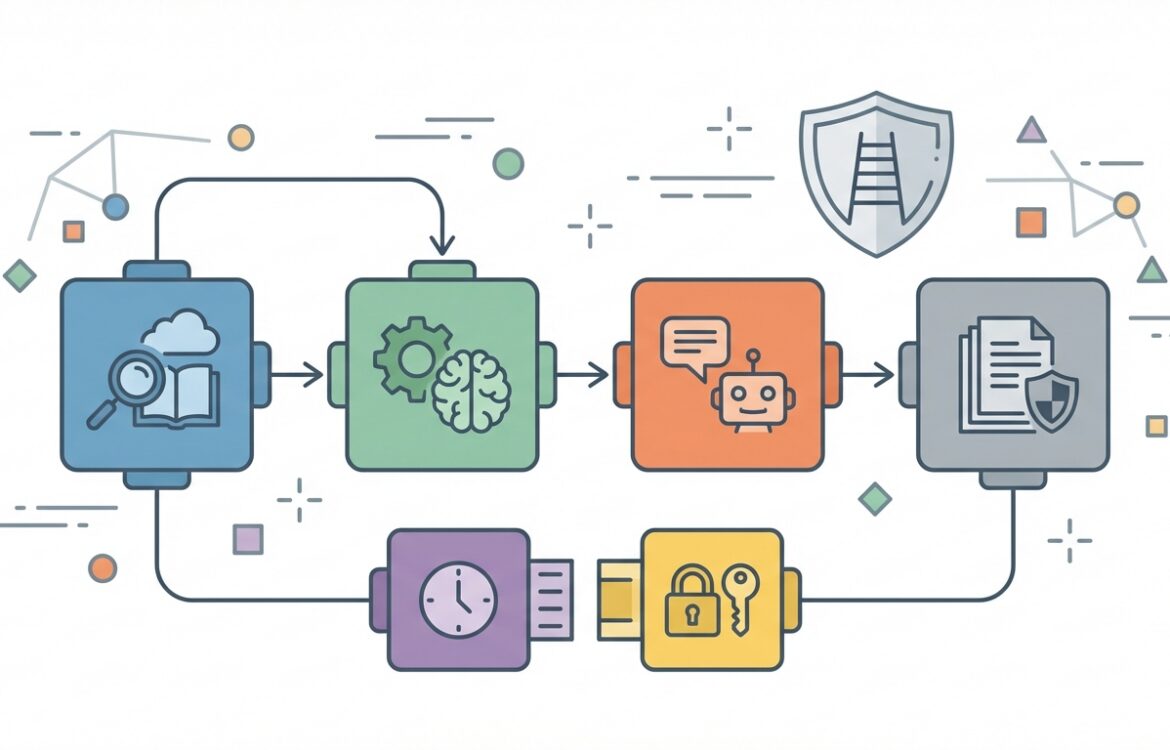
Career Moats in the AI Era: Building Durable Advantage with RAG, Fine‑Tuning, Evaluation, Tooling, and Infrastructure
Practical guidance for AI engineers who want to create durable, technical career moats in the AI era. Covers what a career moat is, high-value technical specialties (RAG, PEFT, evaluation, monitoring, governance), concrete trade-offs, common implementation mistakes, and testing/observability practices with citations to official docs and research.

AI in Education: Teaching and Studying Smarter — A Practical, Evidence-Based Workflow for Schools
A practical guide for school leaders and teachers to deploy AI in education: step-by-step workflows, tools and prerequisites, evidence and case studies, privacy and ethics checklists, common mistakes, and measurable pilot designs to teach and study smarter with AI.

AI and Creativity: Tools, Taste, and Craft — What the Evidence Says and Practical Steps for Creators
This evidence-based overview examines how AI and creativity are changing creative work, taste, and craft. It summarizes observable signals, reported benefits and limits, documented risks (legal, economic, cultural), how different groups are affected, and practical guidance creators and organizations can use now.

Self-hosting LLMs: A Practical Guide to Evaluation, Trade-offs, and Deployment
A practical, evidence-based guide to evaluating self-hosting LLMs: who benefits, what capabilities to expect, hardware and cost considerations, security and compliance trade-offs, common pitfalls, and realistic alternatives backed by official docs and third-party benchmarks.

How to Monetize Data with AI: Practical Business Models, Costs, and a 6‑Month Execution Plan
A practical, evidence‑based guide for product managers, data leaders, and founders who want to monetize data with AI. Covers realistic business models, step‑by‑step execution, tooling and pricing ranges, compliance checkpoints, risks, and metrics to measure ROI. Includes citations to vendor pricing and regulatory guidance so you can build a defensible plan.